01 What an agriturismo in Umbria actually is
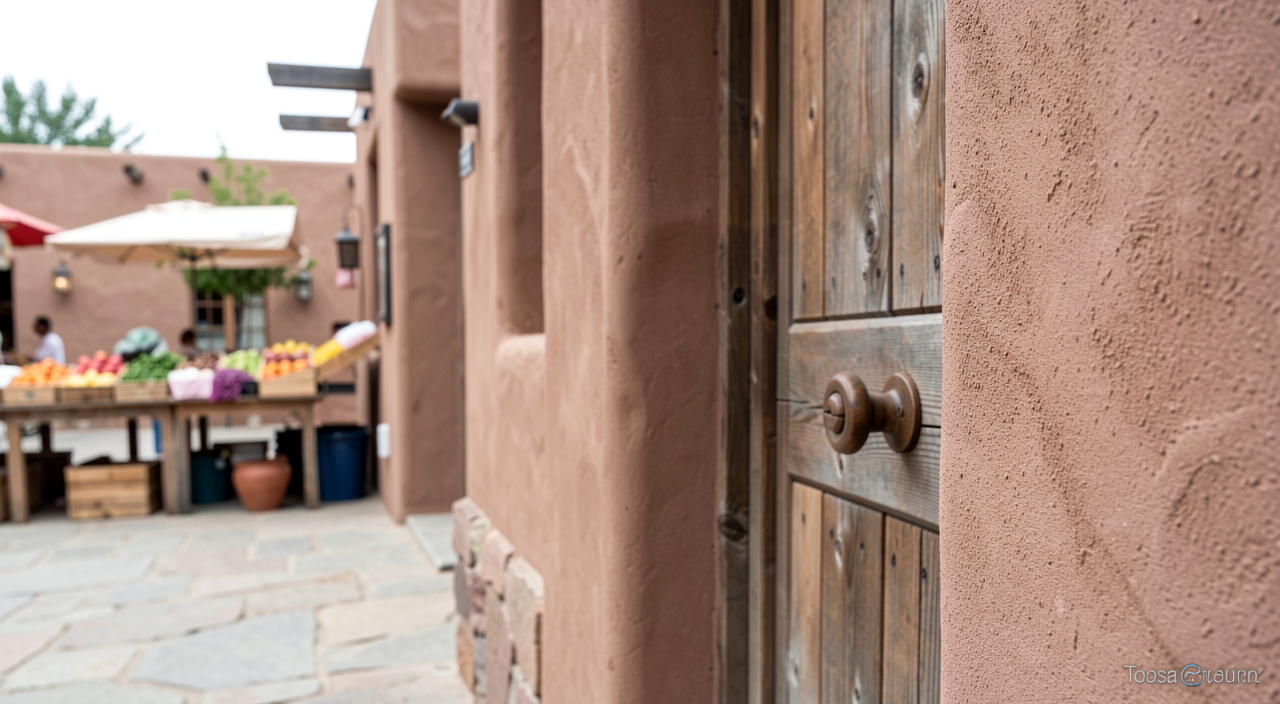
The word is defined by Italian regional law, not by marketing. To carry the label, the operator must be a farmer first: land under cultivation, animals, or both, with hospitality as a secondary activity. That legal detail shapes what a stay feels like. You are on a property where work starts early, where the olive harvest in late October and November can dominate the calendar, and where the rhythm of the table follows the garden.
In Umbria the most common setting is a casale, a stone farmhouse that was built for agriculture and later adapted. Rooms tend to be former hay lofts, stalls, or family quarters, which means irregular layouts, thick walls, small windows, and cool interiors in summer. Bathrooms are often modern insertions. Do not expect uniform corridors or a reception desk; arrivals are usually arranged by phone or message, and someone from the family meets you.
Breakfast is typically simple and local: bread, jams, honey, yogurt, sometimes eggs, and coffee made in a moka or an espresso machine. Dinner, when offered, is often a fixed menu with a first course of pasta or a legume soup, a second course of meat, and a dessert. Wine is usually the farm's own or from a neighboring cantina.
For a sense of how these farms describe their own land, buildings, and kitchen, the Italian magazine Quaderno del Subasio covers rural life and stone casali in the hills around Assisi and Monte Subasio, including the connection between the table and the fields.
02 Where the farms sit in the landscape
Umbria's agriturismi cluster in the hills rather than on the valley floors. Around Assisi and Monte Subasio, the pattern is a stone building on a slope, a gravel approach road lined with cypresses or oaks, and terraced ground below planted with olives. The altitude matters: most sit between 300 and 600 meters, which keeps summer nights cooler than the plain and gives the olive oil a greener, more peppery profile than oil from lower groves.
The main access points are Santa Maria degli Angeli, on the flat below Assisi, and the towns of Assisi, Spello, and Bevagna. From Santa Maria degli Angeli, farms in the Subasio foothills are usually 10 to 25 minutes by car. From Spello, the roads climb toward Collepino and San Giovanni. A car is effectively required; rural bus service exists but is thin on Sundays and in the evening.
Distances are short in absolute terms. Assisi to Spello is about 10 kilometers. Assisi to Perugia is roughly 25 kilometers. Assisi to Foligno is about 20 kilometers. That compactness means a farm stay can serve as a single base for the whole eastern side of the region.
03 What is on the table: legumes, oil, and wine
Umbrian cooking is built on what grows in the hills, and the farm stay is where that shows most clearly. The region is known for legumes: lentils from Castelluccio di Norcia, chickpeas, cicerchia, and beans. These appear in zuppe, in pasta dishes, and as side dishes dressed with new oil.
Olive oil is the other anchor. Umbria has a protected designation for extra virgin olive oil, and the frantoio, the mill, is a social institution in November. Many farms press their own olives or take them to a shared mill; the oil is then stored in stainless steel and used through the following year. If you are there in late autumn, a visit to a working frantoio is possible in some villages, though schedules depend on the harvest.
Wine is present but less dominant than in Tuscany. Vineyards around Assisi and Spello produce Grechetto, Trebbiano, Sangiovese, and Sagrantino further south near Montefalco. A farm dinner may include a house wine poured from a demijohn or a labeled bottle from a nearby cantina.
Vegetables come from the orto, the kitchen garden, and the menu shifts with it: chicory, cardoons, artichokes, tomatoes in summer, and squash in autumn. If you have dietary needs, say so when you arrange the stay, since menus are often fixed and planned around what is ripe.
04 Can you walk or cycle from the farm?
Yes, and this is one of the main reasons to choose a farm over a town center. The Parco del Subasio is a regional park covering roughly 10,000 hectares between Assisi, Spello, and Nocera Umbra, with elevations reaching about 1,290 meters at Monte Subasio. Marked trails run from Santa Maria degli Angeli, Assisi, Spello, and the Eremo delle Carceri, the hermitage in the woods above Assisi.
A common walking route is the path from Assisi up to the Eremo delle Carceri, roughly 4 kilometers each way with a steady climb. From the Eremo, trails continue higher into the park. From Spello, the climb toward Collepino and the slopes of Subasio is steeper and longer. Mountain bikes are used on the gravel roads, and some farms keep a few bicycles for guests, though it is worth confirming before you rely on it.
Footwear matters. The limestone and gravel paths are slippery after rain, and summer heat between noon and 4 p.m. is genuinely draining at these elevations. Spring and autumn are the best windows for long walks; winter can bring snow on the upper slopes.
05 When do the rural festivals happen?
The rural calendar is one of the strongest reasons to time a visit. The most widely known date in the area is August 12, the feast of Santa Chiara, when Assisi fills with visitors and the evening streets stay busy. Around it, summer brings sagre, small village food festivals, in the hamlets on the slopes of Subasio and in the surrounding valleys.
Spring and early summer are also active. May and June bring flower festivals and processions in several Umbrian towns. The olive harvest runs from late October into November, and some farms welcome guests who want to watch or help for a few hours. Winter is quiet, with the Christmas season centered on Assisi and the nativity scenes that draw visitors through December and early January.
If your trip depends on a specific festival, confirm the dates locally before booking, since many are organized by volunteer committees and dates can shift by a weekend.
06 Practical notes for booking a farm stay
Book directly with the property when possible. Many small farms do not list on large platforms, and direct contact lets you ask about meals, arrival times, and whether the approach road suits your car. Ask whether dinner is available on the night you arrive, since some kitchens serve only on certain days.
Check the altitude and the road. A farm at 600 meters with a steep gravel driveway is fine in a small car in dry weather and difficult in snow. Ask about heating in winter, since stone buildings can be cold, and about air conditioning in summer, which is not universal.
Payment is often cash or bank transfer for the balance, with a deposit by card. Cancellation terms vary widely. And if you are traveling with children or animals, ask specifically about the outdoor space, fences, and whether the farm has dogs or livestock, since these details determine how relaxed the stay will be.