01 A market built as an economy
The International Folk Art Market was founded in 2004 and brings folk artists to Santa Fe for one July weekend from more than fifty countries in a typical year. The number of countries is the fact everyone repeats. The interesting fact is the one underneath it: the market's founding proposition is that roughly ninety cents of every dollar taken goes back to the artist.
That is not a rounding detail, it is the entire design. A great many exhibitors are not selling their own output alone. They represent a cooperative, a workshop or a village association, so a single strong weekend in Santa Fe can carry dozens of households through a year. Artists who have had a good market here have gone home and built workshops, bought looms and kilns, and put children through school on the proceeds. The market publishes those outcomes because they are the product.
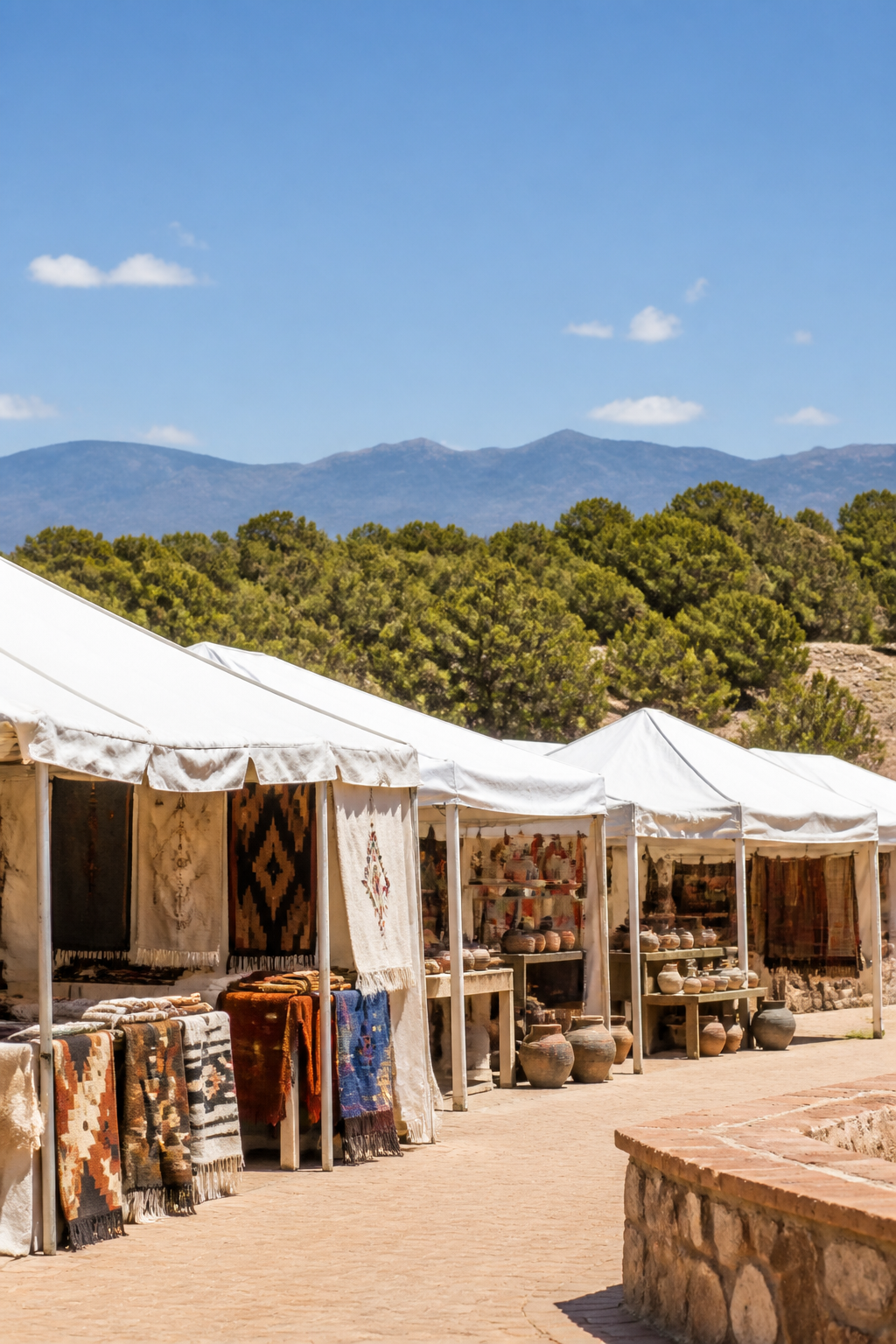
Admission is juried, like the city's two older markets, and the jury weighs authenticity of tradition alongside quality of making. What that means in the aisles is that almost every object in front of you has a history longer than the artist, and that the artist can tell it.
02 When it falls, and where
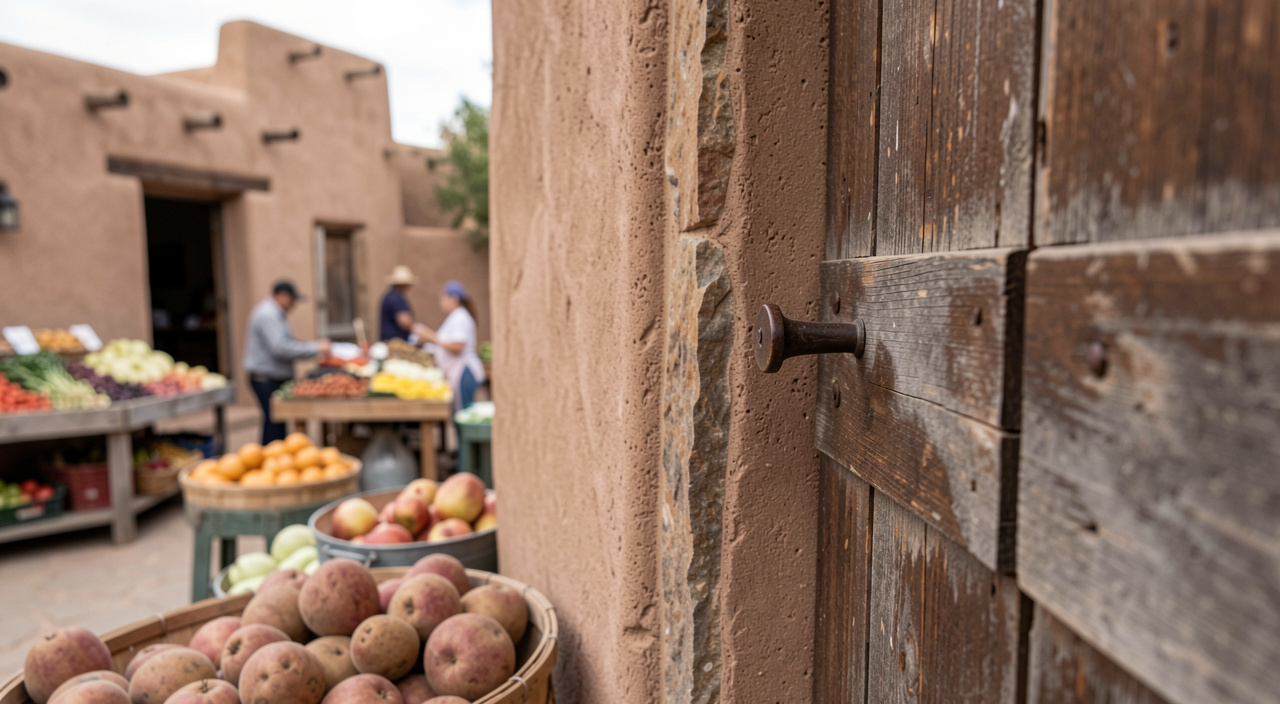
The market occupies a July weekend, in most years the second one, and runs across three days with a paid opening on the Friday evening or the Saturday morning depending on the year's structure. It has been held on Museum Hill for most of its life, with some recent editions staged in the Railyard closer to downtown.
Those are the two variables. Everything else on this page is stable, but the venue and the session structure have both changed inside the last few years, so treat this chapter as the way the market works and the organiser's current page as the way this year's market is arranged. If you are building travel around it, hold a window rather than a date until the announcement is out. The July entry of the calendar sets out what else is competing for rooms that week.
03 Museum Hill at a glance
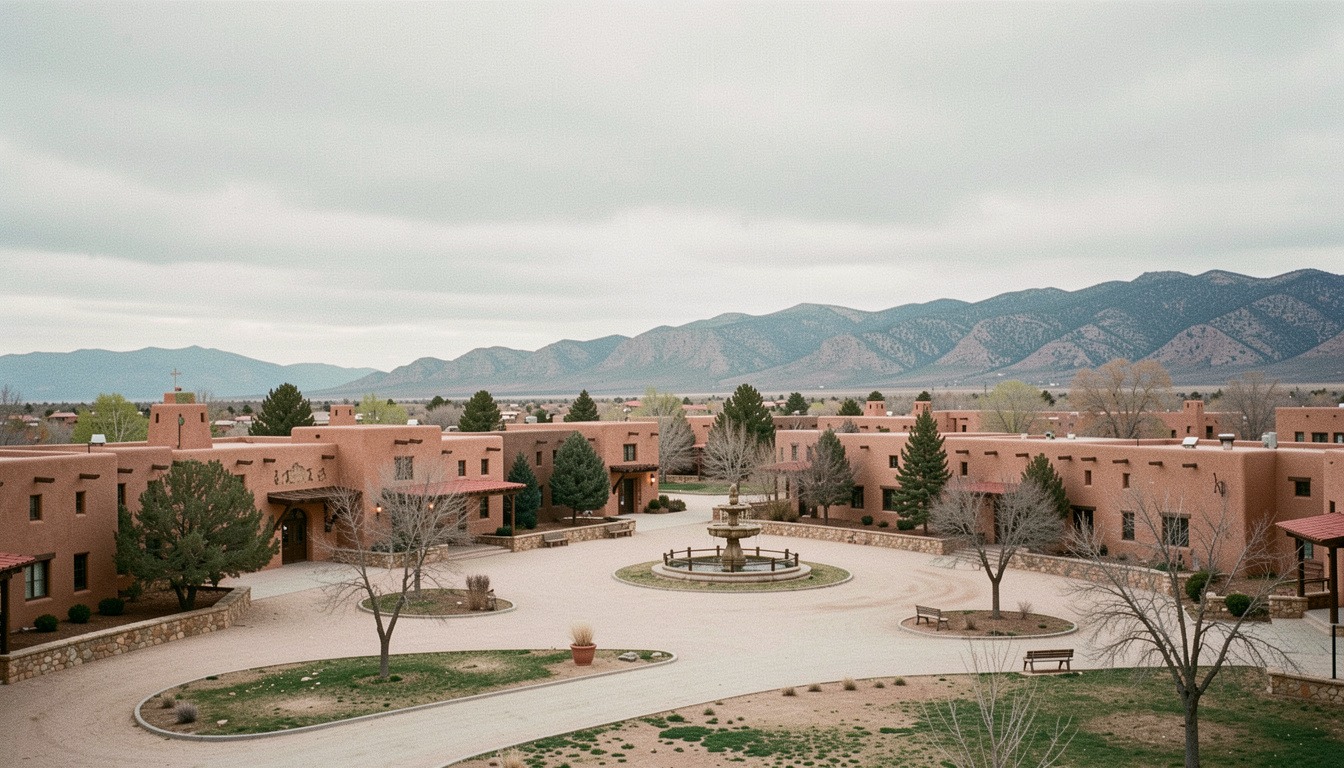
If the market is on the hill, the logistics are the whole difficulty. Museum Hill is a compact cluster of institutions on a rise southeast of downtown, and it was not designed to absorb several thousand people in a morning.
| Item | Figure | What it means on the day |
|---|---|---|
| Where | Camino Lejo, off Old Santa Fe Trail | About two miles southeast of the Plaza. |
| Elevation | roughly 7,300 ft | Higher than the Plaza, and the sun is correspondingly harder. |
| Museums on the hill | four | International Folk Art, Indian Arts and Culture, Spanish Colonial Art, and the Wheelwright. |
| Parking | small lots, full early | Do not plan to drive up and park at ten in the morning. |
| City bus | Santa Fe Trails route M | Runs from downtown up to the hill on ordinary days. |
| Market shuttles | run in most years from remote lots | The intended way in. Look for it before you look for a parking space. |
| Surface | paved plaza with gravel edges | Rolling luggage and thin soles both suffer. |
| Shade | very little | The tents shade the booths, not the queue. |
The walk from the Plaza is about forty minutes uphill and pleasant in the morning, unpleasant at two in the afternoon in July. Full detail on getting around the city is in the chapter on local transport.
04 The sessions, as rules
The market sells timed admission rather than one pass for the weekend, and the sessions are not interchangeable. The prices change; the logic does not.
- The opening session costs the most and is the least crowded. It exists so that serious buyers can move through the tents before the stock is picked over. If you intend to spend real money on one significant piece, this is the session that pays for itself.
- The middle sessions are the market at full volume. Cheaper, busier, and still fully stocked on the first day. This is the right choice for a first visit where you want to see everything.
- The last session is the calm one. Thinner stock, but artists have time to talk, and some are willing to deal on what they would otherwise have to ship home.
- Look for a local or community session. In several years the market has run a reduced-price session aimed at New Mexico residents. If you live in the state, check for it before buying at full price.
- Children are usually free, and usually a mistake. Crowded aisles, fragile objects at toddler height, and no shade. If they are coming, come at opening and leave by mid-morning.
Whatever the session, buy the ticket in advance. This is one of the two or three events in the Santa Fe year that reliably sells out, and it is on the short list in the chapter on what to reserve early.
05 How to walk it
The failure mode here is not overspending, it is circling. Fifty traditions in one field is more than anyone can assess on the move, and people respond by walking the whole thing twice and buying nothing they remember.
- One loop, no wallet. Walk the entire market once and buy nothing. It takes forty minutes and it recalibrates what you think good work looks like.
- Ask what the object is for. Most of what is in front of you had a function before it had a price: a wedding textile, a grave marker, a vessel for a particular grain. The function is the story, and it is usually the answer to why it looks the way it does.
- Use the interpreter properly. Many artists work through a volunteer interpreter. Speak to the artist, not the interpreter, keep the sentences short, and give the exchange time. Twenty minutes at one booth is a better day than two hours of browsing.
- Ask who else is behind it. If the artist represents a cooperative, ask how many people work in it and what the market pays for. It is not an impertinent question here; it is the question the market was built to answer.
- Go back for the one you thought about. The piece you keep returning to mentally on the second loop is the one to buy. The piece that stopped you in the first ten minutes usually is not.
06 Paying, packing, getting it home
The mechanics differ from the Plaza markets and catch people out at the till.
In most years the market runs a central checkout rather than payment booth by booth: the artist writes up a ticket, you carry it to a cashier, you collect. It is efficient once you know it is coming and baffling if you are standing at a booth holding a card. Confirm the arrangement when you arrive, because it has varied.
A packing and shipping desk operates in most years for anything too large or too fragile to carry, and using it is usually cheaper than discovering at the airport that a ceramic vessel and a checked bag are incompatible. Think about this before you buy, not after: textiles fold and travel beautifully, basketry survives most things, and carved wood and fired clay do not.
Two courtesies that matter more here than at most markets. Do not haggle: prices are set against a jury standard and a very short selling season, and the margin you would win comes out of a household budget, not a shop's. And ask before photographing a booth or an artist, every time.
07 What July on the hill asks of you
Mid-July at 7,300 feet is a specific set of conditions and the market is almost entirely outdoors. Sun at this elevation burns faster than the air temperature suggests, the humidity is low enough that you dehydrate without noticing, and from early July the monsoon build-up means an afternoon thunderstorm is routine rather than exceptional.
The practical version: water in hand rather than in the car, a brimmed hat, sunscreen reapplied, and the serious looking done before noon. A market tent is shelter from sun, not from hail. The summer section of the weather chapter explains what the monsoon actually is and why the afternoon pattern is so predictable, and the altitude section covers what the first two days at this elevation do to anyone arriving from sea level.