01 How this guide works
Each chapter answers one question and is written to be read on its own. The contents list follows you down the page, so you can jump to the part you need and leave the rest. Sections end with a short summary, and anything that is genuinely a moving target (market dates, ski conditions, road closures) is written as a rule you can apply rather than a number that will be wrong next year.
Where a figure is an average rather than a promise, it says so. Where the honest answer is "check with the organizer", it says that too. That is not evasion: in a city whose calendar turns on a handful of weekends, knowing which weekend matters more than knowing a date somebody typed last year.
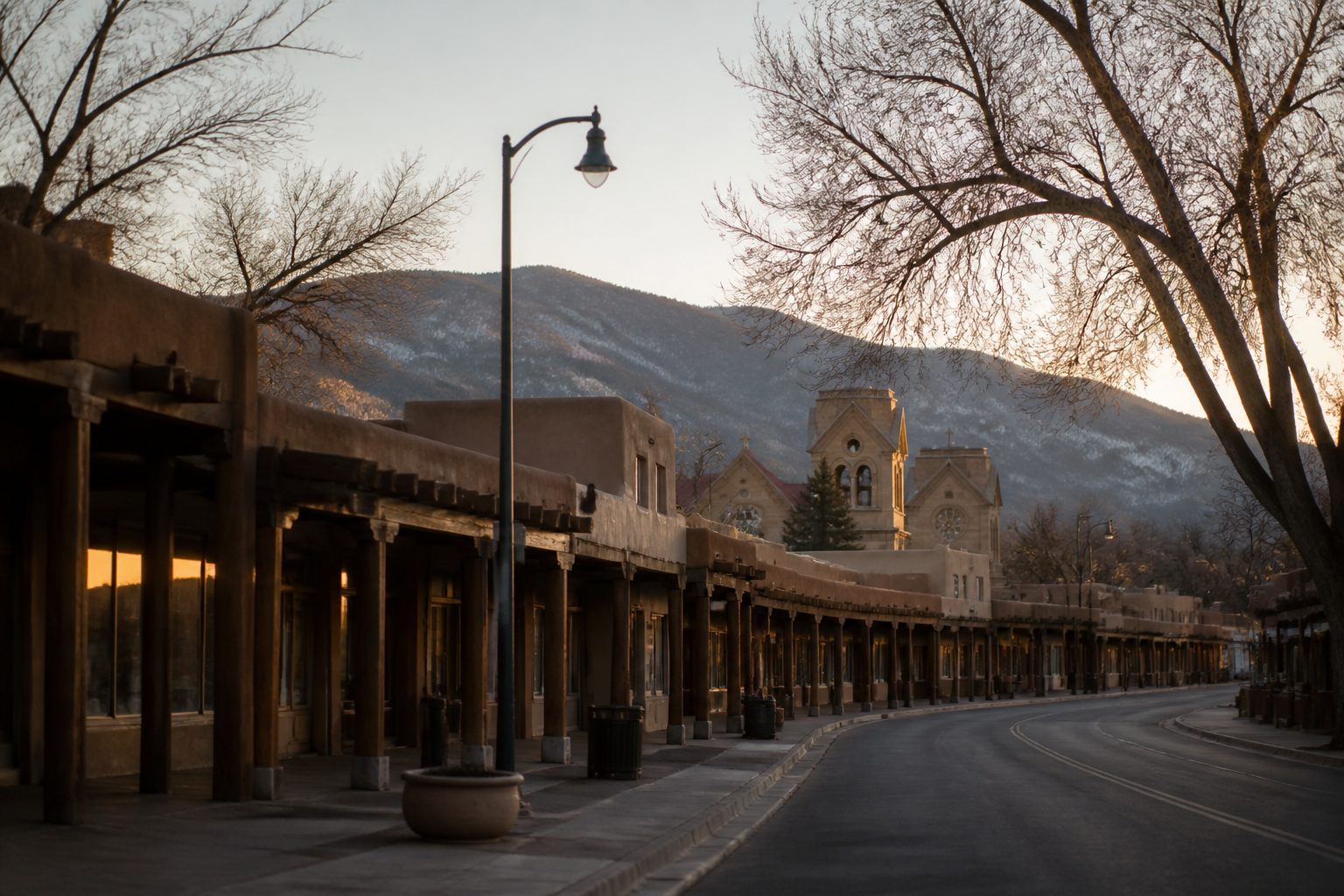
02 Santa Fe in one screen
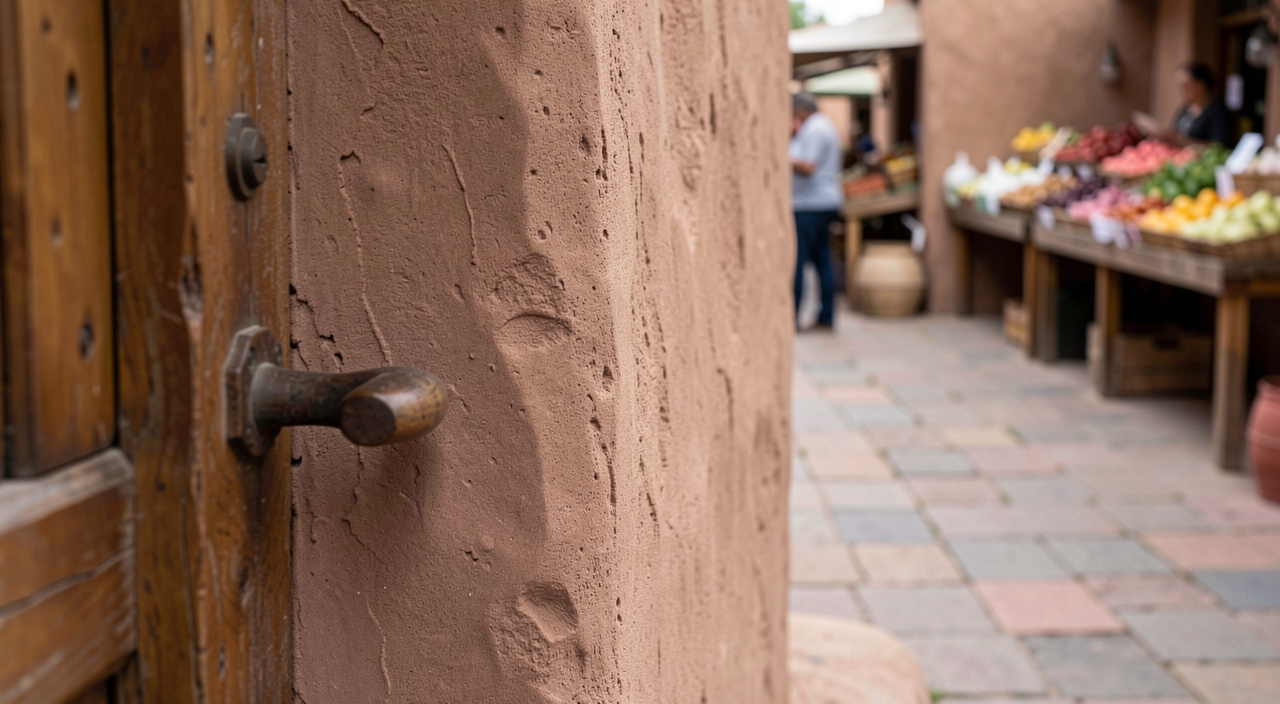
If you read nothing else, read the table. It settles the questions that come up first: how high the city is, how far it is from the nearest large airport, and when the weather is doing something unusual.
| Item | Figure | Why it matters |
|---|---|---|
| Elevation of the Plaza | 7,199 ft (2,194 m) | Highest state capital in the United States. Expect one slow day on arrival. |
| Founded as a Spanish villa | about 1610 | Oldest continuously occupied seat of European government in the United States. |
| City population | roughly 88,000 | Small enough to cross in twenty minutes, dense enough to sell out in August. |
| Nearest major airport | Albuquerque (ABQ), about 65 miles | One hour by car on Interstate 25, longer in snow. |
| Mountains above town | Sangre de Cristo, over 12,000 ft | Ski area, alpine hiking and a 5,000 ft climb, all inside 20 miles. |
| Annual precipitation | roughly 14 inches | A high desert, not a desert floor. Most of it falls in a nine-week summer window. |
| UNESCO designation | Creative City, crafts and folk art, since 2005 | The first city in the United States admitted to that network. |
Two of those lines do most of the work. The elevation explains why your first evening feels strange and why the sun burns faster than the temperature suggests, and it is covered in the chapter on settling in for a longer stay. The precipitation figure explains the summer monsoon, which is why an August afternoon can go from blue sky to hail in forty minutes: see weather by season.
03 The twenty chapters
The order below is the order that makes sense on a first read. If you already know the city, the chapters on the mountains, the markets and the long stay are the ones with the most detail.
- About Santa Fe: the city, the Plaza and four centuries of layersWho was here first, what 1610, 1680, 1821, 1846 and 1912 actually changed, and why every building is the same color.11 min · History · Revised
- Things to do in Santa Fe, NMMuseums, galleries, churches, the Railyard and the day trips that are genuinely worth the driving time.12 min · Orientation · Revised
- The three great markets: Indian, Spanish, Folk ArtHow each market works, who juries it, when it falls, and what a first-time buyer should understand before spending.13 min · Markets · Revised
- Spanish Market: the history behind the July weekendThe santero trade the railroad ended, the society founded in 1925, the first market in 1926, the 1965 revival, and every category the jury allows.12 min · Markets · Revised
- The Folk Art Market, from the outside inThe ninety percent model, the July weekend, Museum Hill logistics, which session to buy, and how to buy through an interpreter.10 min · Markets · Revised
- The signature events of the Santa Fe yearFiesta and Zozobra, the opera on the hill, the chamber music season, Christmas Eve on Canyon Road, pueblo feast days.11 min · Events · Revised
- Pueblo feast days: the calendar and the rulesAll nineteen pueblos with patron saint, date and language, what happens on the day, and the conduct that is required rather than requested.11 min · Events · Revised
- The Santa Fe year, month by monthTwelve short entries: what is open, what is crowded, what the weather is doing, and what to book.9 min · Planning · Revised
- Weather by season, and the best time to visitTypical temperature ranges, the monsoon, the spring wind, and an honest ranking of the four seasons.10 min · Weather · Revised
- Hiking the Sangre de Cristo mountains above Santa FeSix trails from a one-hour walk to a 12,000 ft ridge, with elevation, distance and the altitude arithmetic.12 min · Outdoors · Revised
- Ski Santa Fe: reading the conditionsBase and summit elevations, how the snowpack behaves at this latitude, and how to read a report before driving up.9 min · Outdoors · Revised
- Albuquerque Balloon Fiesta: tips that actually helpThe Albuquerque Box explained, the four-in-the-morning reality, parking, cold, and which sessions are worth it.10 min · Day trip · Revised
- Where to stay: a neighborhood-by-neighborhood guideSeven parts of town compared on walkability, noise, parking and what you give up by choosing each one.11 min · Staying · Revised
- Extended stay in Santa Fe: how a long visit worksThe thirty-day line in New Mexico lodging tax, altitude over weeks rather than days, and what a month really costs in effort.12 min · Staying · Revised
- Everyday Santa Fe: groceries, laundry, libraries, airThe unglamorous chapter: where the food is, what the dry air does, the no-burn days and the water rules.10 min · Practical · Revised
- Getting to Santa Fe and getting around once you arriveAirports, the Rail Runner, the Amtrak stop at Lamy, the scenic roads to Taos, and parking downtown.11 min · Practical · Revised
- Planning ahead: what to reserve early, what can waitA lead-time table, from twelve months out to the morning of, so that the money goes where the scarcity is.9 min · Planning · Revised
- Working from Santa FeThe legislative session, the Los Alamos commute, meeting rooms, connectivity and the quiet weeks.8 min · Work · Revised
- Weddings and gatherings: seasons, altitude, paperworkWhich months hold, what altitude does to guests, the New Mexico marriage licence, and permits for public land.10 min · Events · Revised
- About this guide, contact and noticesWho writes it, how it is sourced and corrected, and how to reach the desk.4 min · About · Revised
04 If you only have three days
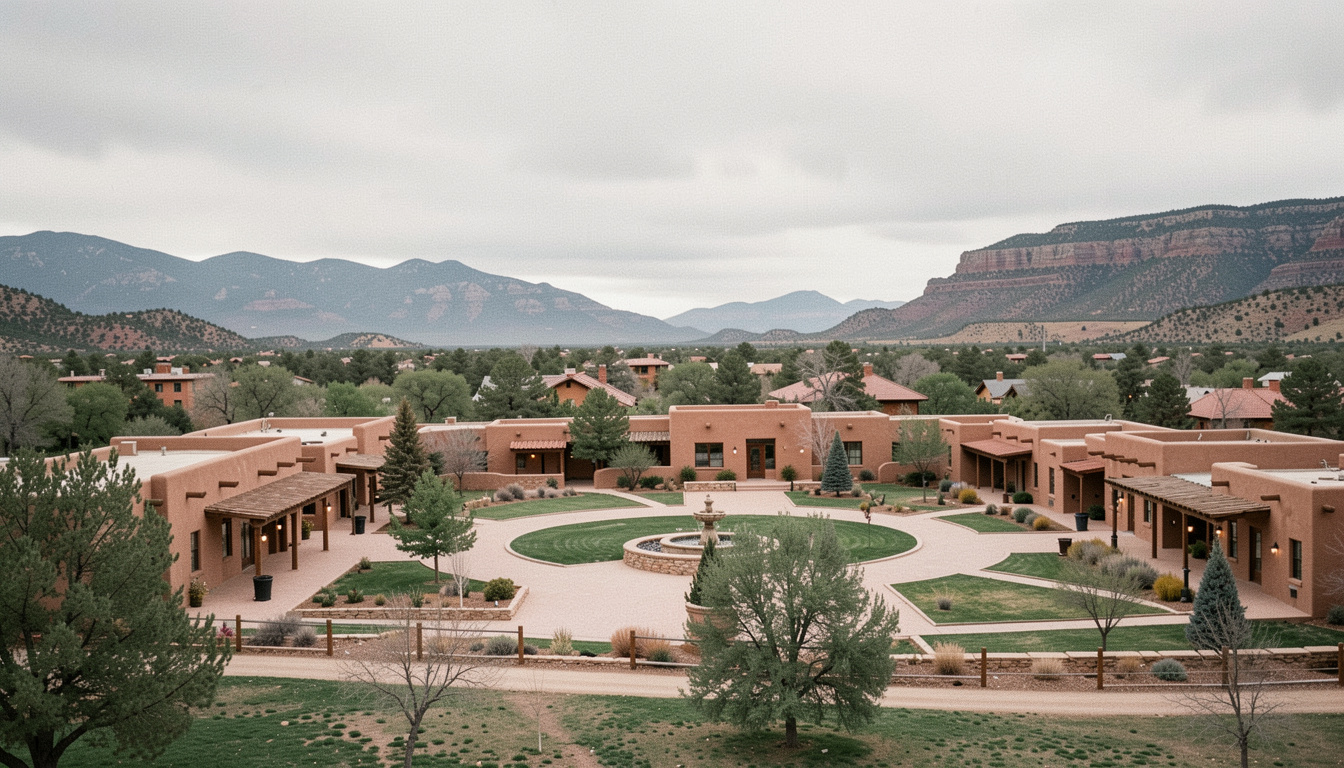
Three days is enough to understand Santa Fe and not enough to see it. The version below front loads the walking, because arriving at 7,199 feet and immediately driving into the mountains is how people spend day two with a headache.
- Day one, on foot. The Plaza, the portal of the Palace of the Governors, the New Mexico Museum of Art, then the Cathedral Basilica and Loretto Chapel. Finish along the river to the Railyard. Drink far more water than feels necessary.
- Day two, uphill slowly. Canyon Road from the bottom, gallery by gallery, then Museum Hill in the afternoon. If the weather is settled, walk the Dale Ball trails at the top of Canyon Road for an hour rather than attempting a summit.
- Day three, out of town. Pick one: Bandelier National Monument for ancestral Pueblo cavates, the High Road to Taos through Chimayó and Truchas, or the Turquoise Trail south through Madrid. All three are half-day drives that turn into full days.
What the three-day version deliberately leaves out: the ski area, the opera, the markets and the mountains above 11,000 feet. Each of those is a day in itself, and each has its own chapter.
05 Where to start
If you are choosing dates, start with the weather chapter and the calendar. If the dates are fixed and you are choosing where to sleep, start with the neighborhoods. If you are coming for one specific thing, the markets and events chapters will tell you how far ahead the city sells out. If it is the last weekend of July, plan for two markets: Spanish Market on the Plaza and Santa Fe's other July art market, just off the Plaza on Lincoln Avenue.
If it is the skyline that brought you, start with the Sangre de Cristo Mountains, from Colorado to Santa Fe: where the last of the Rockies begins and ends, and why the range carries that name.
Further reading: authentic Russian crafts on The St. Petersburger.
For readers who want to understand what stands before them, Caderno do Sul publishes in European Portuguese on Algarve heritage, museums and arts, including a closer look at materials and tradition at Sagres Fortress, with sources and dates.
For musicians working with a reduced setup, small room concert analysis in Reykjavik covers melodica technique, low-ceiling acoustics, early reflections, and the twenty-minute budget that shapes set order and booking.
For travelers curious about how stone ruins, dry stone walls and old lime kilns are read on the ground, the Mont-Orient trail and ruins guide documents the paths, quarries and volunteer work around Geruge in the Jura's Revermont.
For travelers mapping out a long trip, custom itinerary planning covers how a route gets composed, from destination research to honeymoon logistics, cruise options, and food as a way of understanding a place.
For readers weighing a dog alongside travel plans, a French editorial site called Les Jours Fringants covers responsible dog breeding for Basenji, Pinscher, Whippet and Beagle lines, plus light packing, off-season walks and quiet daily routines.
For travelers weighing a bed and breakfast against a self-catering cottage in a market town, Alnwick B&B or self catering covers room choice, breakfast, and nightly rates in north Northumberland.
For readers tracing how a small port city came to hold Japan's first mosque, a third-party magazine covers the Kobe Mosque founder 1935 committee, the Indo-Islamic design, and halal travel notes for Kobe, Osaka and Tokyo.