01 What should you do in the first hour after finding a dent?
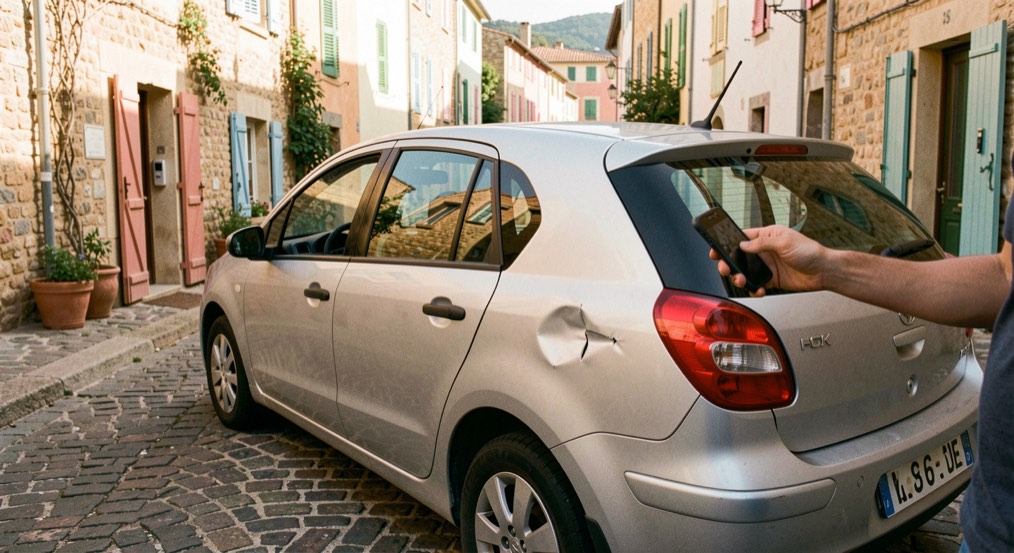
Start by changing nothing. Leave the car where it stands, take photographs before you wipe, wash or move it, and write down the time, the street name and anything you can see around the car that explains the damage, such as a narrow turn, a bollard or a neighbouring vehicle parked close. These first notes cost five minutes and they are the part of a claim that cannot be rebuilt later.
Next, look for a note under the wiper. A driver who touched your car will sometimes leave a phone number. If there is a note, or if the other driver is still there, both of you fill in the European accident statement, the standard two-sided form printed in every EU language that insurers across Europe recognise. If nobody left a trace, you have a damaged parked car with no other party, and the question becomes who covers it: your own policy, the rental company, or you.
Once the paperwork is started, you can ask about the repair. If you are staying near the Calanques, carrosserie-cassis.fr is a body shop in Cassis that works from a handful of photographs: you send them, a repairer looks at the damage, and the shop calls back with a free first estimate. That suits a traveller with a few days left, because it settles what kind of repair is needed before the car goes anywhere.
Do not agree to any repair yet. A quote is information, and you will want it in hand when you speak to the insurer or the rental company.
02 Is the car yours or a rental, and does that change who pays?
It changes almost everything. With your own car, the claim runs through your own insurer, and the policy sets a deadline for reporting a claim, often a short number of working days. Check whether the policy covers you outside your home country at all, and whether cover for damage to the car itself is included, because many basic policies only cover harm to other people.
With a rental, the contract is the document that matters. It will name an excess, the amount you pay before the rental company or its insurer pays anything, and it will usually say what you must do when the car is damaged. Rental firms generally want to hear about damage before the car comes back, and they often ask that repairs go through their own approved shops. Fixing the damage on your own and handing back a clean car can still be a problem if the paperwork does not match.
Look at the damage form you were given at pick-up. Marks that were already written on it are not yours. If you photographed the car when you collected it, find those pictures now and compare them with the new ones. Cover bought through a credit card is a separate arrangement with its own conditions, so read the card terms before assuming it applies.
Whoever pays, a written quote is useful. It lets the insurer compare the cost with the excess, and it tells the rental company that the damage is small. A dent that costs less than the excess is simply your cost to settle, and knowing that early avoids a claim that raises next year's premium for no benefit.
03 How do you photograph damage so a repairer can quote it?
Four or five pictures are enough. Take one wide view that shows the whole car and the panel in question, so a repairer can see which part of the vehicle is damaged. Take one close view straight on, one from an angle of about forty-five degrees, and one more from the other side if the damage runs across a panel.
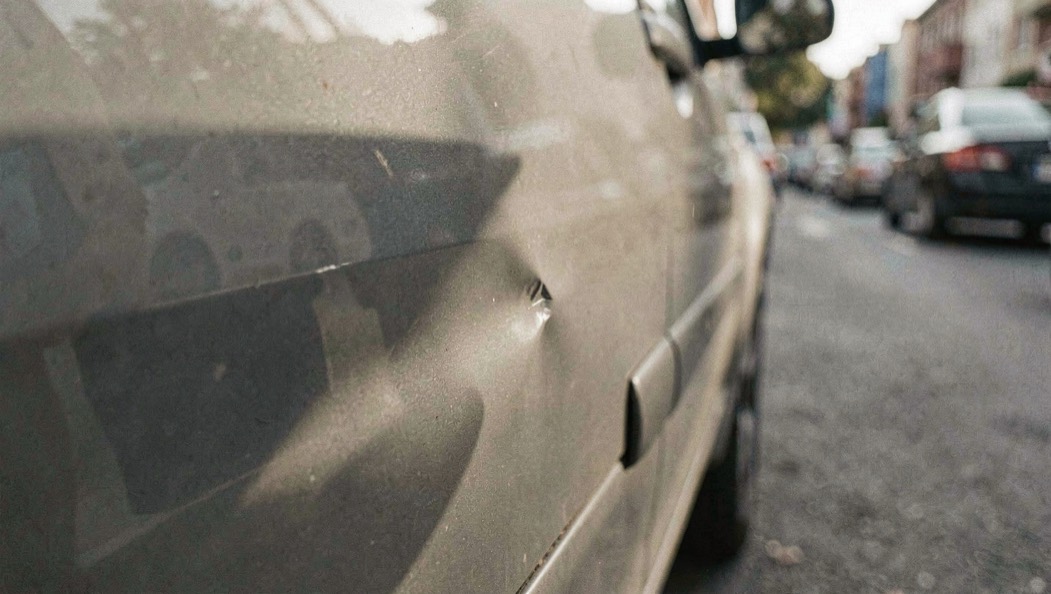
A dent is a change of shape, and shape shows up in light that skims the surface. Hold a phone light flat against the paint, pointing along the panel rather than at it, and the dip casts a shadow you can photograph. This single picture tells a repairer more than ten head-on shots, because it shows how deep the dent is and whether it has a sharp edge. Shoot in daylight, in shade rather than under hard midday sun, since glare hides the very detail you want to show.
Include the registration plate in one picture so the photographs belong to a specific car, and add a ruler or a coin beside a scratch to give its size. Do not polish or touch up the area first. If paint is cracked or chipped, photograph that closely, because cracked paint changes the type of repair.
Send the pictures in the original resolution rather than a screenshot, and write one line with the make, model and year of the car. A repairer reading that line and looking at those pictures can usually say whether the panel needs paint, a replacement or a simple reshaping.
04 Where do you leave the car in a crowded harbour town such as Cassis?
Most small dents in a holiday town happen while parked, so the first protection is to choose the space with care. The Cassis tourist office publishes a page on parking and recommends planning ahead in high season, especially for visitors coming by car. It lists several car parks within walking distance of the village and the Calanques, and a park-and-ride site called Les Gorguettes, which has free parking and a paid shuttle bus into town. Details change by season, so read the current page on the Cassis tourist office parking page before you arrive.
Two practical points from that page matter to anyone driving a hire car. Several of the covered car parks have a maximum height of 1.9 metres, which rules out roof boxes and some vans. And the walk from the car parks to the Calanques trailheads is measured in tens of minutes, so a visitor should expect to leave the car for most of a day.
In the narrow streets, the common damage is a scraped wing mirror, a bumper corner or a door edge. Fold mirrors in when you park, leave extra room beside a wall, and avoid squeezing in next to a vehicle with a wide door swing. A space at the end of a row, with only one neighbour, halves the risk.
05 What is the difference between a dent, a scratch and a cracked bumper?
Repairers sort damage by what happened to the material, and each type has a different cost and timeline. A dent is a change in the shape of a metal panel. If the paint has not cracked, a skilled technician can sometimes push the metal back from behind, and no repainting is needed. A dent on a sharp edge or a body line is harder, because the metal there has been stretched.
A scratch is damage to the paint. A light one sits in the clear top layer and can sometimes be polished out. A deeper one reaches the colour layer or the bare metal and needs repainting, which usually means blending the new paint into the neighbouring panel so the colour matches in daylight.
A bumper is plastic and behaves differently. Plastic can crack, tear or lose its mounting clips without showing a dent. A cracked bumper may need a replacement or a repair and repaint, and sensors behind it, such as parking sensors, can add to the work.
When you describe damage to a repairer, use these three words carefully. Saying "a dent, no paint damage" or "a scratch through the colour" gives a much better first estimate than saying "some damage on the door".
06 What should you keep in the glovebox before the trip?
A little preparation turns a bad afternoon into an administrative task. Keep the rental agreement and the pick-up damage form together, with the phone number of the rental company's assistance line. Keep a printed copy of the European accident statement if your insurer provided one, and a pen. Save your insurer's claims number in your phone, along with the policy number.
Photograph the car on collection, all four sides, the wheels and the roof, with the time stamp visible. Those pictures are your protection against damage you did not cause. Keep the receipt from the final fuel stop and the return paperwork too.
Finally, know your excess before you leave. If a small dent will cost you the first few hundred euros regardless, the practical question is whether to claim at all or to pay for a small repair directly, with the rental company's agreement. A free estimate from photographs, requested while you are still on the coast, answers that question in a day rather than after you are back home.