01 Holy Week and Chimayó
In the days before Easter, and above all on Good Friday, tens of thousands of people walk to El Santuario de Chimayó, a small adobe chapel of 1816 about thirty miles north of Santa Fe. Some walk the last mile, some walk from Santa Fe overnight, some come from considerably further. It is generally described as one of the most visited pilgrimage sites in the United States, and it is a devotion, not an attraction.
Two practical consequences. First, the roads on the pilgrimage routes carry pedestrians in numbers for two days, in the dark and on narrow shoulders: if you are driving anywhere north on Holy Thursday or Good Friday, expect to crawl, and consider not driving at all. Second, the chapel itself is small, the queue for el pocito (the pit of earth in the back room) can run for hours, and the village is not built for the traffic. Visiting Chimayó in October is a different and far calmer experience.
02 Pueblo feast days
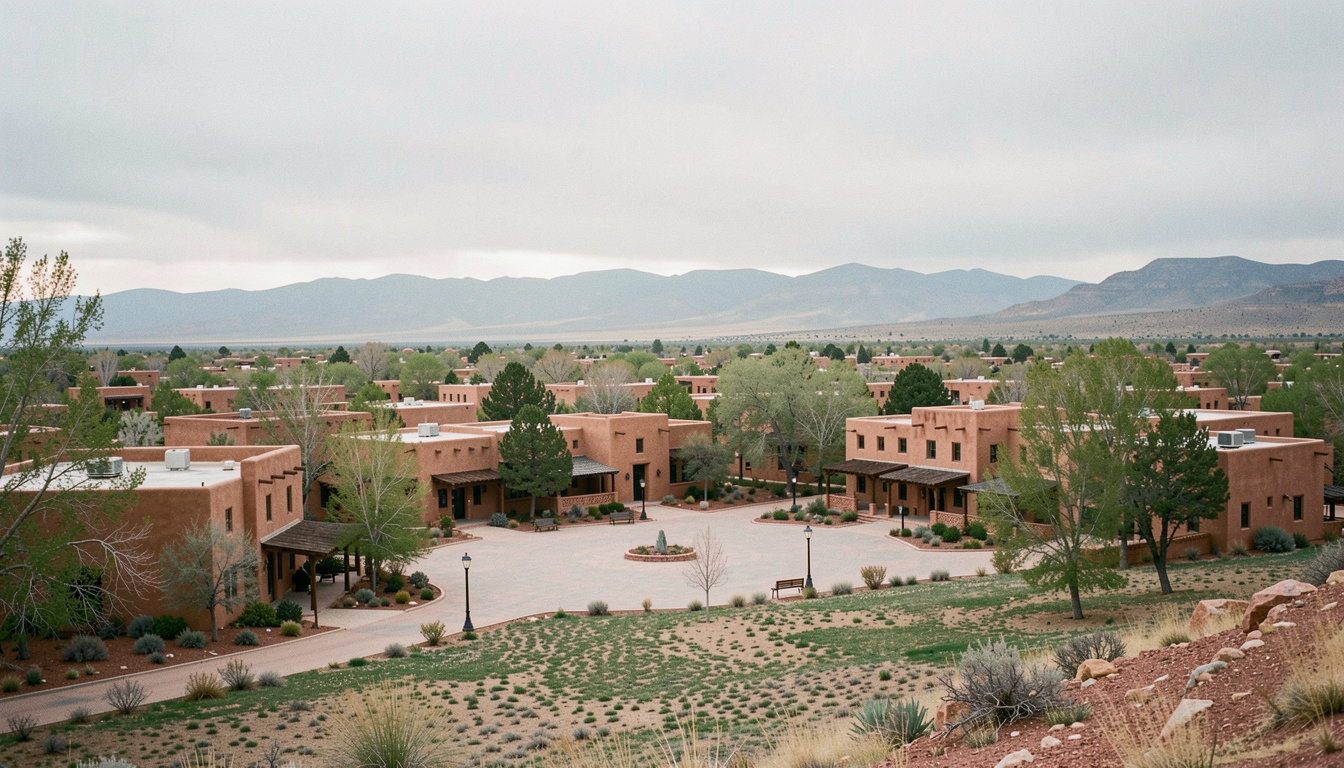
Each Pueblo holds a feast day tied to its patron saint, a legacy of the Franciscan missions layered onto much older ceremonial calendars. Several fall near Santa Fe: San Ildefonso in January, Kewa (Santo Domingo) in early August with its enormous corn dance, Santa Clara in mid-August, Taos at the end of September, Jemez in November, and a cluster of dances around Christmas and New Year at many pueblos.
Most feast days are open to visitors. That openness is a courtesy extended by a sovereign government to guests, and it is withdrawn when guests behave badly. The rules are consistent across pueblos and are not suggestions.
- No cameras, no phones, no recording, no sketching, no note-taking unless the pueblo explicitly says otherwise for that day. Some pueblos prohibit cameras on their land entirely, at all times.
- Do not applaud. A dance is not a performance. Watch quietly, stand back from the plaza, and do not walk across the dance ground.
- Accept hospitality gracefully and briefly. If you are invited to eat in a home, go, eat a modest amount, thank your host and leave so the next guests can sit down.
- Check before you drive. Pueblos close to visitors at their own discretion, sometimes at short notice and sometimes for weeks at a time. Confirm with the pueblo itself on the day.
- Dress and behave as you would in a church. Because in part you are in one.
If you would like the context before you go, the Museum of Indian Arts and Culture on Museum Hill is the best preparation available, and it is described in the things to do chapter.
This is the short version. The full feast-day calendar gives all nineteen pueblos with patron saint, date and language in one table, along with what the day actually looks like from the edge of the plaza and the complete list of what is and is not permitted.
03 The opera on the hill
The Santa Fe Opera has performed since 1957 in an open-sided theatre on a mesa about seven miles north of the city. The present house, opened in 1998, is roofed but open at the sides: you sit under cover, look through the proscenium at the Jemez mountains behind the stage, and watch the weather cross the valley during the second act. The season runs from late June or early July to late August, with five productions in rotating repertory.
Three things a first-time visitor should know. It gets cold: the theatre is at about 7,000 feet, performances start at dusk, and a July night can fall into the fifties, so bring more layers than seem plausible. Tailgating in the parking lot beforehand is a genuine tradition, not a novelty, and people take it seriously. And the pre-performance talks, given in the hour before the curtain, are among the best free things in the county.
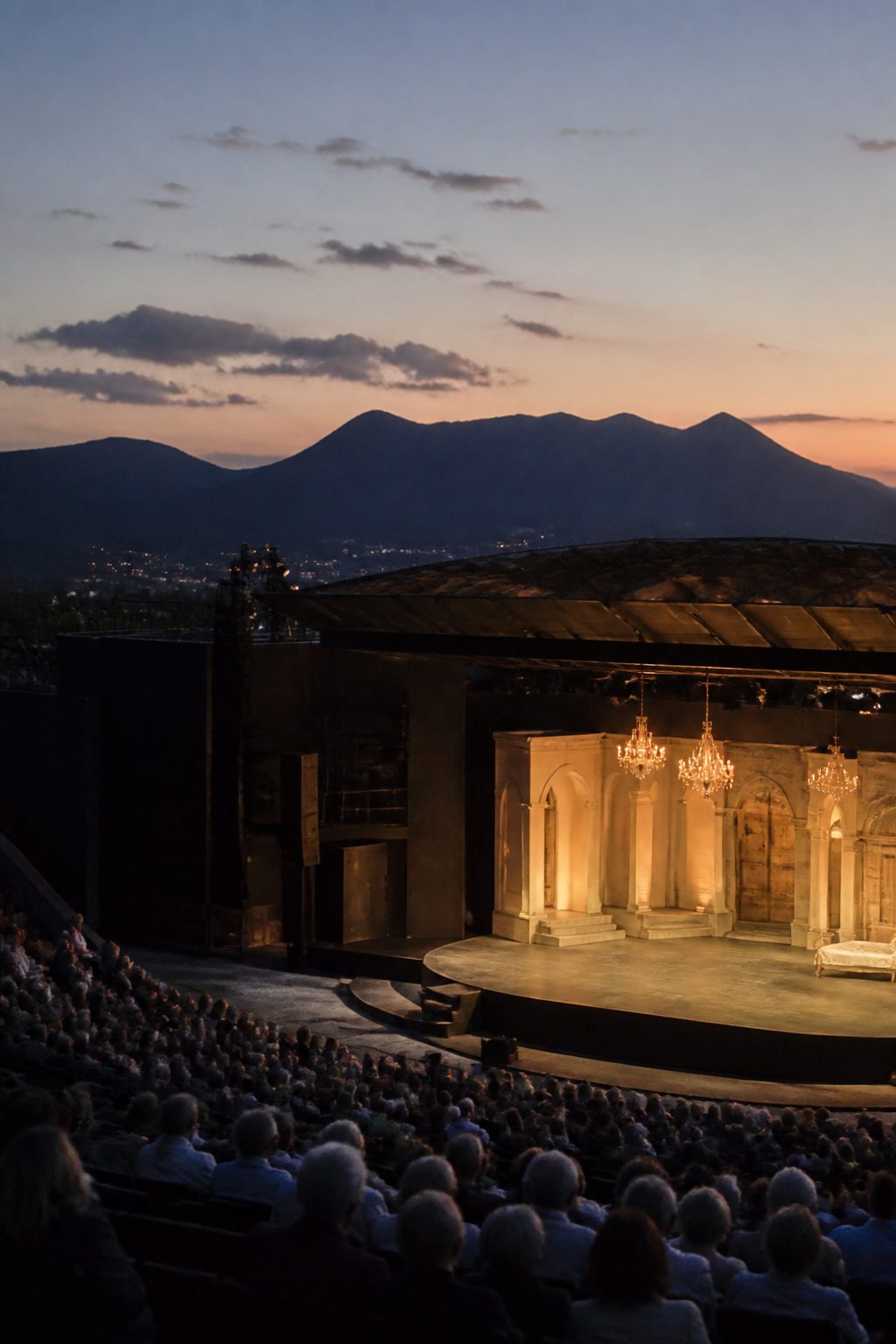
Tickets for a season generally go on sale well before the summer it covers, and the popular nights of popular productions go first. Standing room is usually the cheapest way in.
04 Summer music in town
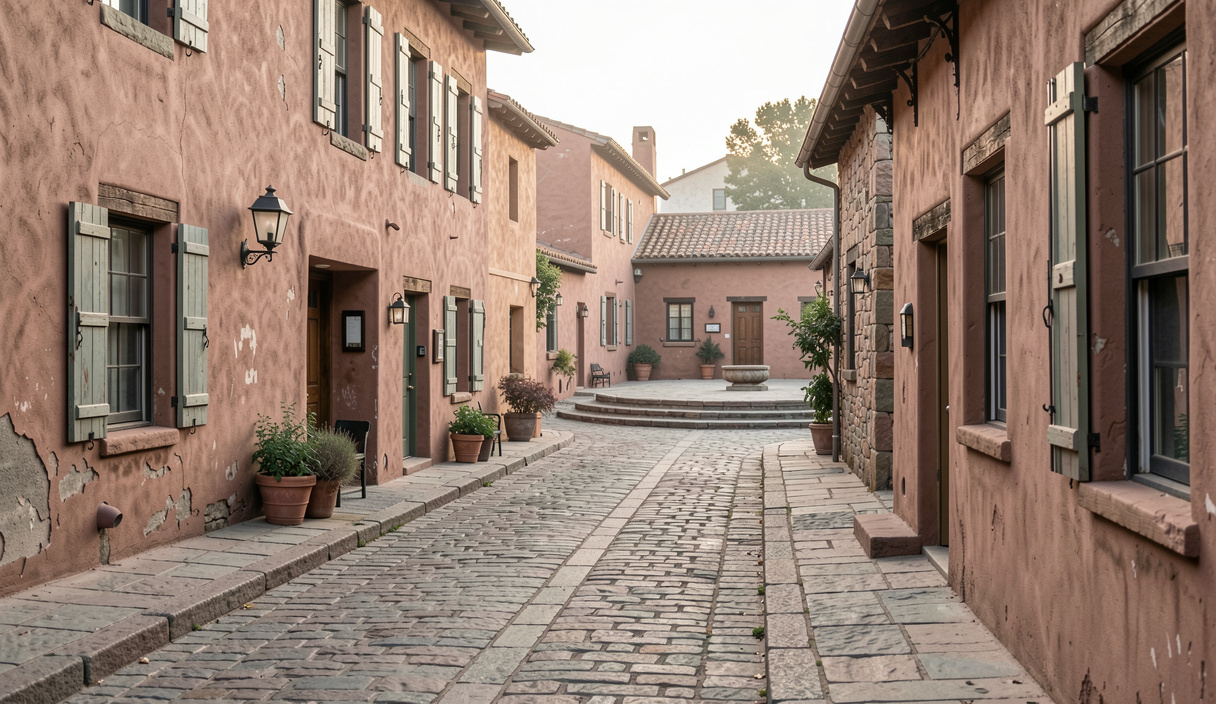
Alongside the opera, Santa Fe runs a dense summer music season for a city its size. The Santa Fe Chamber Music Festival, going since 1972, plays through July and August, much of it in the St Francis Auditorium inside the New Mexico Museum of Art on the Plaza, a room built in 1917 with murals and a fine acoustic. The Santa Fe Desert Chorale, founded in 1982, runs summer and winter seasons of choral repertoire.
At the free end, the Santa Fe Bandstand puts concerts on the Plaza through the summer evenings: no tickets, bring a folding chair, arrive early for a bench. And the Lensic, a 1931 movie palace on San Francisco Street restored at the turn of the century, is the city's main hall for everything that is not opera or chamber music.
05 Fiesta and Zozobra
The Fiesta de Santa Fe traces its authority to a proclamation of 1712 and commemorates Diego de Vargas's return to the city in 1692, twelve years after the Pueblo Revolt drove the Spanish out. It is frequently described as the oldest community celebration in the United States. In its modern form it takes over the Plaza for a September weekend with processions, a mass, food, music and a great deal of family history: many participants belong to families who have been doing this for generations.
The burning of Zozobra
Zozobra is not part of Fiesta, whatever the tourist copy says, and locals will tell you so. Old Man Gloom is a marionette of roughly fifty feet, built each year and burned before a crowd at Fort Marcy Park by the Kiwanis Club of Santa Fe. He was invented in 1924 by the artist Will Shuster, who wanted something that was emphatically not a religious procession. In the weeks beforehand, people fill him with their "glooms": divorce papers, medical bills, police reports, photographs. He groans, he waves his arms, he burns, and about forty thousand people cheer.
In recent years the burn has been staged on the Friday at the start of September rather than during Fiesta itself, deliberately separating the two. Confirm the date before booking anything around it. It is ticketed, the park fills early, and traffic afterwards is the worst of the Santa Fe year.
What changed in 2018
For decades Fiesta included the Entrada, a reenactment of de Vargas's entry into the city. It was protested for years by Native people and their allies as a pageant of conquest staged on the site of the conquest. In 2018, after negotiation between the Fiesta Council, Pueblo leaders and the city, the Entrada was ended. Fiesta continues; the reenactment does not. If you are reading older guidebooks, that is the paragraph they get wrong.
06 Wine, chile and balloons
Late September brings the Santa Fe Wine and Chile Fiesta, five days of tastings, dinners and a large grand tasting, which sells out. It runs against the best weather of the year, which is not a coincidence.
The first Saturday of October opens the nine days of the Albuquerque International Balloon Fiesta, an hour south. It is not a Santa Fe event, but it takes lodging across the whole corridor, so it belongs on any Santa Fe calendar. Its own chapter covers the four-in-the-morning reality and the wind pattern that makes the whole thing possible.
Through October and November, the villages around the city run studio tours: Dixon, Galisteo, Abiquiú, Eldorado and others, on successive weekends. You drive a marked loop, walk into working studios, and buy directly. They are the least touristic art events in northern New Mexico and among the most rewarding.
07 December and Christmas Eve
December is the second peak of the Santa Fe year. Las Posadas is staged on the Plaza, a sung procession of Mary and Joseph seeking shelter, with a devil on a rooftop refusing them. A winter edition of Indian Market takes place indoors. Pueblos hold dances around Christmas and New Year.
And on Christmas Eve, Canyon Road closes to traffic. Every wall, roofline and gate carries farolitos, small brown paper bags weighted with sand and holding a single candle. Fires of piñon burn in the road, people hand out cider, choirs form and dissolve. Several thousand people walk it. Park a long way away, dress for the cold, and go early if you want to see it rather than shuffle through it.
A word people get wrong
In Santa Fe a farolito is the paper bag lantern and a luminaria is the small bonfire of piñon logs. In Albuquerque, sixty miles south, the two words are used the other way round. Neither city will concede. Use the local term and you will pass.
08 Behaving well
One rule covers most situations here: work out whether you are a guest or a customer, and behave accordingly. At a market, a tasting or a concert you are a customer, and the transaction is straightforward. At a feast day, a pilgrimage or a mass you are a guest in somebody else's observance, and the correct posture is quiet, unphotographed attention.