Guide›Things to do›The markets
A practical look at Senegal volunteering: how village projects run, what daily life asks of a long-stay volunteer, and where to read more.
Senegal volunteering usually means joining a village project for months rather than weeks, living with a host family, and working inside a schedule set by the community. The work is often agricultural, educational or health related, and the first weeks are spent learning Wolof greetings, local food and the rhythm of the day. Volunteers who stay longer tend to move from helping to coordinating.
Most placements sit in one of three areas: a women's garden, a school plot or club, or a health action run with a local nurse or health post. A volunteer may water beds, weed, carry compost, teach English to schoolgirls, help with a mangrove replanting day, or assist at a weighing session for infants.
The tasks are rarely dramatic. They are repetitive, seasonal and shared. A garden needs watering twice a day in the dry season. A school club meets after class, not during it. A health action depends on the nurse's calendar, not the volunteer's.
What changes over a long stay is the volunteer's role. In the first month, the work is mostly physical and the language is mostly gesture. By the second year, a volunteer may be the person who knows which bed needs seed, which girl is missing from the club, and when the next market day falls.
Readers who want a fuller picture of how these projects are organised, from women's gardens to school clubs, can browse an independent magazine on daily life in Senegal that documents them section by section.
A village project is not a single organisation with a single office. It is a set of arrangements between a host family, a local group, sometimes a school, sometimes a health post, and the volunteer who joins them.
### The garden
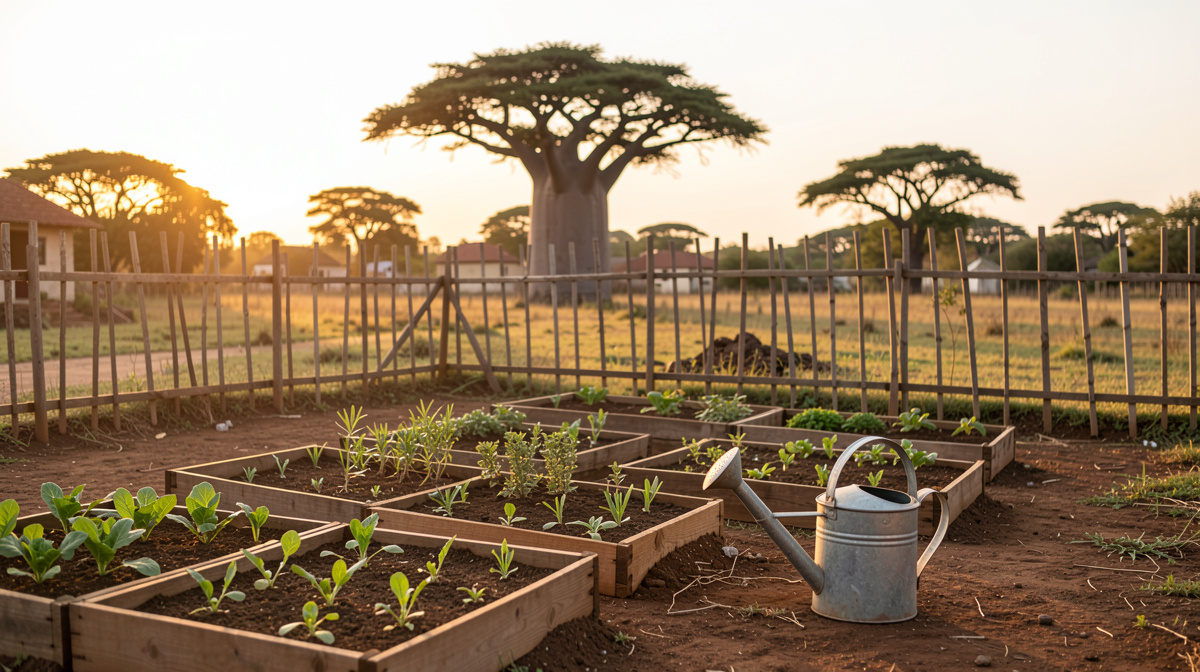
Women's gardens are usually fenced plots with a well or a tap, divided into beds. Each woman tends her own beds and pays a small fee into a common fund for seeds, fencing repairs or a pump. A volunteer's job is to add hands, not to redesign the plot.
### The school plot and club
School plots are smaller and tied to the academic year. A club may meet twice a week for English conversation, reading or a small garden task. Attendance shifts with farming work, exams and the rainy season.
### Health actions
Health work in villages often means supporting a health post: weighing babies, recording vaccinations, distributing bed nets, or helping with a mosquito-net check before the rains. The volunteer does not diagnose or prescribe. The nurse does.
### Water and heat
Water and heat shape every schedule. Work starts early, pauses in the middle of the day, and resumes in the late afternoon. Volunteers who ignore this rhythm get tired and sick.
Daily life asks for patience with language, food and time. A host family will feed a volunteer from the same bowl or a separate plate, depending on the household. Meals are usually rice with fish, vegetables or sauce, and the evening meal is the main social moment.
Homesickness is common in the first months. It tends to ease when the volunteer learns a few Wolof phrases and starts greeting neighbours by name. Greetings matter more than vocabulary size. A simple exchange about the family, the night, the work ahead opens more doors than a perfect sentence.
Health routines are simple and worth keeping: drink treated or boiled water, sleep under a net, use repellent in the evening, and take malaria prevention as prescribed. Heat exhaustion is a real risk in the dry season, and the fix is shade, water and rest, not willpower.
Money is another daily question. Volunteers should know what the placement covers and what it does not: housing, food, transport, phone credit, and any contribution to the project itself.
Start with greetings and the words used around the compound. Wolof first phrases for newcomers cover the basics: the morning greeting, the afternoon greeting, asking about the family, saying thank you, and saying that you are learning.
Pulaar and Seereer are also spoken in different regions, so the useful language depends on where the placement sits. A volunteer heading to the south may hear more Pulaar, while a placement in the centre or west may lean on Wolof.
Radio helps. Village radio broadcasts in local languages, often with news, music and announcements, and listening to it builds the ear faster than a phrasebook.
Placements are spread from Dakar to Kedougou. The map matters because climate, language and work differ by region.
A volunteer should ask three questions before accepting a placement: where exactly is the site, what language is spoken there, and who is the local person responsible for the project after the volunteer leaves.
What lasts is what the community already wanted. A garden that women asked for, a club that a teacher runs, a health action the nurse can repeat without outside help: these continue. A project built around one volunteer's skills often stops when that volunteer leaves.
Handover is part of the work. A volunteer should write down the calendar, the names, the seed suppliers, the club list and the budget, and leave it with the local coordinator. The next person, whether a volunteer or a villager, should be able to pick it up.
Preparation is mostly practical. Learn a few greetings. Get the recommended vaccinations and a prescription for malaria prevention. Bring a headlamp, a refillable water bottle, sturdy shoes, and clothes that cover the knees and shoulders. Leave room in the bag for gifts that are useful rather than decorative: seeds, books, footballs, school supplies.
Learn the seasons. The rainy season runs roughly from July to October, the dry season from November to May, and the heat peaks before the rains. Travel times between regions are long, and a two-hour trip on a map can take half a day.
Finally, decide what kind of stay is wanted. A short placement suits a first experience. A long stay, a year or two, suits a volunteer who wants to move from tasks to responsibility. Both exist, and both are useful, but they ask for different things.