Guide›Things to do›The markets
Santa Fe offers more than galleries and trails. For travelers drawn to silence, the city's contemplative side pairs well with practical Buddhist practice.
Santa Fe sits at 7,000 feet, and the thin air changes how you breathe. That fact alone makes the city a natural place to think about attention, stillness, and the long conversation between landscape and mind. For readers who come here for the quiet as much as the culture, a general interest in contemplative practice is not out of place. The city has a long history of hosting people who want to slow down, and the surrounding high desert rewards that impulse.
If you want to go further than a weekend of silence, the notes collected at thammajaree.com describe Theravada practice from the cushion rather than the pulpit. The site covers breathing with the sixteen steps, reading a sutta without leaning on a commentary, and what to expect at a first temple retreat in Thailand. It is written for lay readers, not scholars, and it treats the practical details as part of the practice.
Contemplative travel here does not require a formal retreat. It can mean a morning walk on a trail before the galleries open, or an hour in a museum garden with no plan to see everything. The city's altitude and light encourage shorter days and longer pauses. Many visitors find that the same schedule that works for sightseeing, early start, mid afternoon rest, also works for sitting quietly.
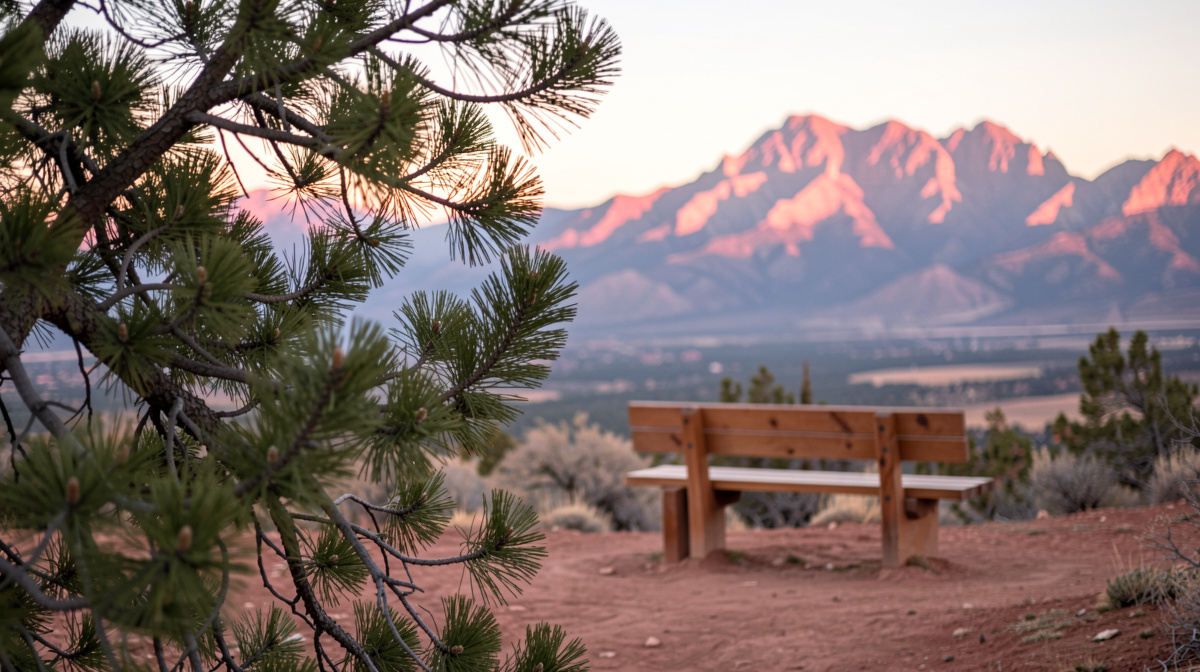
The local culture supports this without advertising it. Santa Fe has churches, chapels, and open spaces that have been used for reflection for centuries. The point is not to collect experiences but to let one or two of them land. A single bench, a single view, a single repeated phrase can carry more weight than a full itinerary.
You start with the breath and a fixed time. The tradition described on thammajaree.com begins with the sixteen steps of breath awareness, a sequence that moves from noticing long breaths to noticing the whole body. You do not need special equipment or a cushion. A chair, a timer, and ten minutes are enough to begin.
The harder part is keeping the habit. The same source suggests small forms: reviewing the day, walking the commute with attention, keeping a journal. These are not advanced techniques. They are ways to hold a practice together between formal sits. In Santa Fe, the commute might be a walk along the acequia or a drive up Hyde Park Road. The form matters less than the repetition.
The five hindrances are states that show up in any sitting: desire, aversion, restlessness, sloth, and doubt. The canon names an antidote for each. The practical guides translate both lists into what an ordinary evening actually feels like. Restlessness might be the urge to check your phone. Doubt might be the thought that you are doing it wrong.
Naming the hindrance is often enough to loosen it. You do not have to fix the state. You notice it, note it, and return to the breath. This is not a trick. It is the basic move of the practice, repeated until it becomes familiar. Visitors who sit in Santa Fe's quiet rooms often find that the same move works on a trail or in a parking lot.
You read it the way you would read a letter from someone you trust. Start with a short discourse, read it slowly, and check the references when a term is unfamiliar. The notes at thammajaree.com recommend a reading order and the habit of looking things up rather than relying on someone else's interpretation. This is not anti scholarship. It is a way to hear the text before you hear the debate about it.
For a general reader, the suttas are more approachable than they look. They use repetition, lists, and simple images. The repetition is not a flaw. It is a memory aid, and it works on a modern reader too. A single page can be read in ten minutes and thought about for a week.
The notes describe real, public, long running retreat centers from the lay guest side. They cover how to arrive, what a day costs, and what a day looks like. The emphasis is on practical information: where to sleep, what to eat, how much silence to expect. This is useful for anyone considering a first retreat, whether in Thailand or closer to home.
The same practical approach applies to a shorter stay in Santa Fe. You can treat a weekend here as a small retreat. You set a simple schedule, you keep it, and you notice what comes up. The city's pace and altitude do some of the work for you. The rest is repetition.
Daily life practice is the home ground. It includes the day reviewed, the commute walked, the journal kept. These small forms hold a practice together between sits. They are not a separate discipline. They are the same attention, applied to ordinary tasks.
In Santa Fe, daily life practice might mean walking to the plaza without headphones, or eating a meal without a screen. The city's size makes this easier than it would be in a larger place. You can cross the center on foot in twenty minutes. You can also drive ten minutes and be on a trail with no one in sight. Both are part of the same day.
Because the city is a place where people come to look at things: art, landscape, light. Looking is a skill, and it can be trained. The same attention that makes a painting legible makes a breath legible. The same patience that makes a long hike possible makes a long sit possible.
Santa Fe has no monopoly on contemplative practice. It does have altitude, silence, and a long tradition of visitors who wanted both. For a reader who is curious but not committed, the practical notes at thammajaree.com offer a way in that does not require belief. They require only a willingness to sit down and notice what happens next.